Showing posts with label Animation Around the World. Show all posts

Friday, October 30, 2009

Ub Iwerks

While it is true that Mickey Mouse's character was mostly developed by Walt Disney, not many people know about the man who first drew out our round eared friend and made Mickey a visual reality. In this sense, Ub Iwerks was the first draftsman of Mickey Mouse. He was Walt Disney's longest partner in the animation business, and perhaps Disney's oldest friend. Here's a blog tribute to Iwerks, for it is unfortunate that not many people know this man behind the Mouse. He definitely deserves more credit for his work.

People assume that Walt Disney was a super octopus being drew everything and made the films himself. Actually, Walt Disney only animated in the beginning of his career and was really more of a master storyteller than a draftsman. Disney was certainly responsible for making the Disney company a corporal success, but it was Ub who did a lot of the craft work--- the animating. In Disney and Iwerk's first company, the Laugh-O-Grams Studio, Ub pretty much animated all the shorts. He also did most of the animating for the Alice Comedies and Silly Symphonies, and sometimes animated entire episodes. AND he set the blueprint of Mickey by first drawing Oswald the Lucky Rabbit, the character Mickey Mouse was based on. What a guy huh?!

The work for Ub grew too demanding, so he decided to break off the partnership with Disney and tried to set up his own studio. He was funded by financial competitor Pat Powers, who conflicted with Disney earlier during the production of Steamboat Willie. Unfortunately, while Ub was a talented draftsman, he could not outmatch Disney in terms of narrative and character development. Thus his business venture didn't work out so well, and he returned to Disney Studio. He helped develop the ground breaking xenographic technique (which was used in Sleeping Beauty). Henceforth he worked mostly on special effects such as combining live action with animation (in the film Song of the South). He also worked for WEB Enterprise, which is today's Disney Imagineering (the company that designs and builds Disney theme parks. Randy Pausch, the former professor from Carnegie Mellon University who gave the Last Lecture, worked for Imagineering). Ub even worked outside the studio and was nominated for an Academy Award for special effects on Alfred Hitchcock's film the Birds.

In 1999 a documentary was made on Ub, called the Hand Behind the Mouse: the Ub Iwerks Story. So that's comforting that the man did receive some degree of recognition. Anyway, since it's Halloween tomorrow (HALLELUJAH) I thought it would be appropriate to link the Skeleton Dance, a Silly Symphonies Halloween special completely animated by Ub Iwerks. Happy Halloween! And enjoy!


http://www.youtube.com/watch?v=jkhxjzc9uuE


Saturday, October 24, 2009

Photoshop and Andy Huang

So I've FINALLY watched most of the wacom tutorials and played around with the Photoshop tools with my beloved tablet. Here's a photo I edited of my brother at the Siesta beach in Florida. I believe this was the experiment using the overlay brush and masks...Other experiments were done using other online images, and I don't know if it would be a copyright infringement if I put them up...so I'll just put this one up. After looking back at the photos, I really miss it there, it was so beautiful, like a painting.

I forgot to mention about the Andy Huang aimations I stumbled upon. He's an independent artist who graduated from the University of Southern California after majoring in fine arts and animation. His work is very futuristic and thought-provoking, and....yes, like many independent animators, the films takes on a dark undertone. His work has received many critical acclaims. I believe he now works in two commercial studios, one called Moo Studios in North America and one called Trouble Makers in Europe. I prefer his individual work.
Doll Facehttp://www.youtube.com/watch?v=zl6hNj1uOkY I couldn't help but watch this several times.

The Gloaming http://www.youtube.com/watch?v=SmHIZMezHOc&feature=channel the word "gloaming" means "the time of day immediately falling after sunset" according to an Web definitions online.


In the related links to Doll Face there was the Bjork music video called All is Full of Love...it's graphics are astonishing but...I don't know I personally think it's reeaally awkward. However, the music video is respected for its technological innovation. The robot design from I Robot must've gotten something from this vid...looks obvious. It's displayed in MOMA (Modern Museum of Art). If there was one word to describe it: lesbots. http://www.youtube.com/watch?v=EjAoBKagWQA

Wednesday, October 21, 2009

Betty Boop

When I was a bumbling little kid I always saw images of her on the front of small accessories and trucks, and I wondered, who is Betty Boop? Why was she always red and surrounded by hearts? I never saw her on the saturday morning cartoons, so was she really a legitimate cartoon character in the first place?

During my usual youtube surfing, I stumbled upon Betty Boop cartoons, and realized that the reason why I didn't see any of her shows was because they all played in the 1930s. Apparently she is one of the first sex symbols in animation history and appealed more to the adult audience...well that explains why I was confused about her role as a kid! It's interesting how cartoons are typically associated with children, but with Betty Boop this was not the case, at least in the beginning of her animated career.

Grim Natwick, an animator at Fleischer Studios, created Betty Boop for the Talkartoon series that played in the early 1930s. Originally the main character in Talkartoon was Bimbo the Dog, and he had a poodle girlfriend who was, in fact, the original Betty Boop. She made her first debut in the 1930 short Dizzy Dishes http://www.youtube.com/watch?v=mTHmF_EEp9I, in which Bimbo is the waiter and Betty is the singer at a restaurant. The studio head Max Fleischer later changed Betty into a human girl, replacing the poodle ears with hoop earings and a dog nose with a button nose. She is accompanied by her friend Koko the Clown, and Bimbo was eventually taken out of the series entirely.

The original Betty Boop in Dizzy Dishes
Fleischer Studios is accredited for the creation of Betty Boop, Koko the Clown, Popeye the Sailor Man, and Superman. Max Fleischer, the head of the studio, is highly respected for his technological innovations, including his frequent use of the rotoscope technique. Rotoscoping is when an animator traces over live action footage to make production a faster and easier process. This causes the characters to move in a very realistic way. This technique is used depending on what the studio wants on the show---it is usually used when a cartoon character has to perform like a professional entertainer or live actor. For instance, in the episode Minnie the Moocher, jazz singer Cab Calloway was rotoscoped and was replaced by an animated walrus. Today, motion capture is the "rotoscope on computer". In movies like Happy Feet, the dancing penguins are a result of motion capturing Savion Glover, the famous tap dancer.

The content in Betty Boop is...well...how should I put it...extremely liberal for its time. I don't know, cartoons back then are pretty strange, in my opinion, especially Fleischer cartoons. The 1932 short Boop-Oop-A-Doop http://www.youtube.com/watch?v=6lVAi323RQQ ahem, certainly makes that clear, as the question of sexual harassment and virginity are brought up in the short...pretty dark subjects, and the fact that its a cartoon makes it even more...odd... Also the humor back then is so different than what is considered funny today. What is today deemed cruel and freakish was entertaining in those days. There are, however, many inventive and clever little tricks that gives Fleischer cartoons a style much different than the Disney's Silly Smyphonies. In Minnie the Moocher http://www.youtube.com/watch?v=mTHmF_EEp9I, Betty depicts the modern teenager rebelling against her old fashioned parents. Betty portrayed this new playful Flapper Girl character to reflect the halcyon days of the Roaring Twenties. This was the reason for her ascension to fame. Her role was later changed into a more maternal figure, which turned off some of the audiences.

The most notable voice actress for Betty was Mae Questel. Betty was based on Helen Kane and Clara Bow, celebrities of the decade. Helen Kane charged Fleischer Studios for unfairly caricaturizing her through Betty, but this charge was later disproved.
Today, Betty Boop remains a popular figure, and despite her peculiar origins, is still a lovable character to many.


Helen Kane

Saturday, October 17, 2009

Ukraine animator Kseniya Simonova

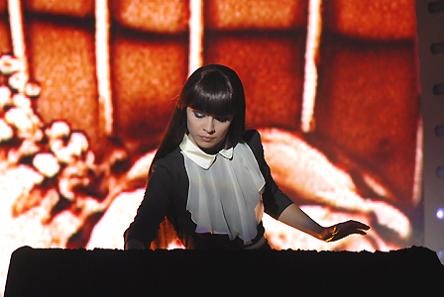
Kseniya Simonova is a sand animator who won first place for the 2009 series on Ukraine's Got Talent http://www.youtube.com/watch?v=518XP8prwZo You go Kseniya! Thanks Jessica Z. for showing me this! Kseniya uses sand to depict the life during World War II, when the USSR fought the Great Patriotic War against the Third Reich. A camera shoots at a birds-eye angle above Kseniya as she sifts sand into images on a lighted table. The camera's footage is shot on a huge screen behind her and captures her live at work from a more dramatic perspective.


It would be great telling stories this way, especially when telling it to kids! The way those magical storytellers do in those picturebooks... I wish I could try it :)

Friday, August 14, 2009

Dutch Animation

The Netherlands!!! What an interesting name. Nether. Lands. Could mean Land of lower region...

The Holland Animation Film Festival is held there, which is pretty well known. I have only seen two films made by the Dutch, both are very powerful and beautiful. They are Academy Award winners for best animated short:

1985 Anna and Bella directed by Borge Ring -Two sisters look back on their lives together---the good and bad parts---but in the end they know that they will always love each other.
2000 Father and Daughter directed by Michael Dudok de Wit- the story of how a girl waits all her life for her father to come back home.

Watch them :)

Saturday, August 1, 2009

French Animation

France is well respected for its animated films. According to Issue 98 of 3D World Magazine in 2007, France's school Supinfocom is ranked number one for most number of student films showing at key international film festivals.
It's ironic that I could not find a detailed history of France's animation industry. So instead of making the usual timeline, I'm just going to write about French movies I've seen.

1998 Kirikou et la Sorcière (Kirkou and the Sorcerer)-directed by Michel Ocelot. This one I saw in my French class. That class was actually pretty intense, at least for me. So I was really glad my teacher gave us a break and showed us this film. The story takes place in West Africa, where a young boy named Kirikou rescues his village from the evil sorceress Karaba. Some parts were random and peculiar, but I loved it overall. It's lush with colors and stylized drawings got me hooked, and the story is so surreal, a visual folk-tale.
2003 Les Triplettes de Belleville (The Triplets of Bellvile)-directed by Sylvain Chomet. The film is about an old Portugese emigrant woman named Madame Souza searching for her grandson Champion, who was kidnapped by mobsters in the famous bike race Tour de France. Mme Souza and her dog Bruno follow the mobsters into the city of Belleville (Beautiful city), which ironically is not beautiful at all and is actually filled with grotesque and obese people (the corpulent statue of liberty holding a hamburger obviously tells us that Belleville portrays the United States in a satirical fashion)
This Oscar Nominee caught my eye the moment I saw the commercial. I was attracted to the brownish tinge in the colors, it gives the environment an eerie antique feeling. I thought it was interesting how all the characters are heavily caricaturized, though I did think it too grossly exaggerated.
2007 Persepolis- based on Marjane Satrapi's biopic graphic novel of the same name. During studyhall I went with my friend to watch it in her AP french class (teehee). Marjane Satrapi also co-directed the film adaption with Vincent Paronnaud, so the film emulates the novel's original style and stays true to the story. Persepolis tells of a young girl who comes of age when her country is in turmoil during the Iranian Revolution. I really loved how this film visualizes Marjane's point of view, expressing how some Iranians feel about the changes in their country. Sniff. It's beautiful.
2007 Même les Pigeons vont au Paradis (Even Pidgeons Go to Heaven)- this Oscar nominated short, directed by Samuel Tourneux, is about a priest who tricks a miser to pay up all his money to get a glimpse of heaven. The miser, however, does not know that this heaven is fake. I thought this film portrayed the well known French skepticism----that everyone is just plain corrupt and we're all suckers in the end.

Well, that's all the ones I saw, au revoir!

British Animation

Wallace and Gromit by Nick Park

In elementary school I had the privilege to befriend one of my most beloved neighbors---the Shannons. They are a British family--- a married couple and their son Adam--- who was best friends with my brother. At the time my parents didn't trust us being home alone (I tend to wander off and not listen to directions), so afterschool my brother and I stayed at their house instead.

No, I did not have a magical adventure everytime I went there, saying that would sound sappy. But there were days that I had a lot of fun. I learned about Liverpool and listened to the parents speaking in a rapid local tongue (It's amazing how different Englishes don't sound alike at all). They pronounced garage "gah-ridge" which I thought was awesome.

Okay back to the subject.

The Shannons radiated an invisible spirit that I still sorely miss. When Mr. Shannon greeted us he would start raving about the latest advances and discoveries he discovered online. When I stepped through the front door, Mrs. Shannon would ask me if I heard about the breaking news of that day. Their son would always dig up grubs with my brother in their backyard and then try to examine the critters with a microscope. This passion to learn, I think, truly depicts the ideal innovative instinct that the British are so well known for in terms of progress---that includes animation.
Three years ago the Shannons moved to Scotland (the taxes here are just overwhelming). They left me so many sweet memories. But perhaps one of the greatest memories was sitting with them and watching their collection of British films that I would not have seen otherwise. Thus I must thank them for all that they have done for me. Now I will share what they've shared, in addition to the films I later sought on my own.


The British have conducted many experiments and research in animation during the 19th and 20th century (1800s and 1900s) Today they are remain in the forefront of the animation industry. In the '90s they delved in to CG animation and are now considered dominant in the field. Animation is used in British music, film, fashion, and interactive media.
A Small History Lesson
1824 physicist, theologian, and lexicographer Peter Mark Roget of London rediscovered the persistence of vision. Here's a brief definition from Richard Williams' the Animator's Survival Kit:

"This principle rests on the fact that our eyes temporarily retain the image of anything they're just seen. If this wasn't so, we would never get the illusion of an unbroken connection in a series of images, and neither movies nor animation could be possible. Many people don't realize that movies don't actually move, and that they are still images that appear to move when they are projected in a series."

Above is the classical toy that demonstrates the persistence of vision. One side of the circular paper is a picture of a cage, and the other side is a picture of a bird. If you spin this paper with the string, you think you see a bird in a cage. A lot of film makers give a "cameo appearence" for this simple toy, I saw it in the Prestige (the whole movie is probably an extended metaphor comparing artists to magicians) and Tim Burton's version of the Legend of Sleepy Hollow (Tim Burton was originally a stop motion animator after all). Isn't that cool?!
Films I watched with the Shannons (and more):

1989 The Big Friendly Giant (The BFG)- based on the beloved children's book by the famous British-born-Norwegian author Roald Dahl, who also wrote Charlie and the Chocolate Factory, Matilda, and James and the Giant Peach. I remember how my brother and Adam would make fun of the Whiz Pop song, it's actually a catchy tune.
1993 the Secret Garden - based on the classic children's book of the same name by Frances Hodgson Burnett, who also wrote the Little Princess. I usually write about animated films, but I will always make room for one of my all time favorite live action films. The rural scenery is so beautiful, and the characters are well played (except for Dickon, who I thought was supposed to be a rustic scrawny figure) The movie is mostly true to the book, but it also has changes that benefit the movie as a movie, if that makes sense. Maybe I'm just sentimental with the past, but I love this movie to bits! It's actually got a 100% on rotten tomatoes. That's an infamous online critic site that I like visitng, and it's not easy getting a positive review!


1938-present the Beano Comic- This is not an animated film, it's a classic comic book that's been selling since 1938! The Shannons gave a Beano comic book to my brother as a gift. As a comicbook fan, I thought it was interesting to see what British kids read for amusement. The iconic characters in Beano are Dennis the Menace (not the same U.S. character), Minnie the Minx, and the Bash Street Kids
1989- present Wallace and Gromit by Nick Park-
This is an classic stop motion animation in which the characters are made of clay moulded over metal armatures. Wallace is a clueless talkative inventor from Wigan Lacanshire who is OBSESSED with cheese (It's because of him that I love cheese). His anthropomorphic and intelligent dog, Gromit, is his silent and loyal companion who always gets Wallace out of trouble.

Shorts
1989- A Grand Day Out
1993- the Wrong Trousers
1995-A Close Shave
Movie
2005- the Curse of the Were- Rabbit


As you can see here, Wallace is munching on a piece of the moon , which is in fact made of cheese. You gotta love him! This is from A Grand Day Out 1989, my favorite of all the shorts
2000 Chicken Run- in the style of and co-directed by Nick Park--- This is a charming story of how a group of British hens try to learn to fly with a American con-artist rooster. Only they have to hurry so they can escape the chicken pie factory.
Scene from Chicken Run made in 2000
Films I discovered:
1954 Animal Farm (image below) directed by John Halas and Joy Batchelor, based on the book of the same name by George Orwell, famous for his political writing and also the author of 1984. The movie stayed true to the book, except for the ending, which they tried to make happier to compensate for the audience's "emotional invetment". I'm glad they did it, because it was really depressing to see cute animals representing a corrupt and ruthless society.
1978 Watership Down (image below) directed by Martin Rosen- based on the well known book of the same name by Richard Adams. It's about anthropomorphic rabbits who leave their burough in search for an ideal home on a hill (sounds familiar? I immediately thought of the Puritans). This is in my opinion the scariest animated film I ever saw. The colors are emotionally draining, all bleak and gray, and then the cute fluffy rabbits get mangled. I think the film aims to a more adult audience, toddlers would be traumatized.
Framestore Visual Effects Company- Is currently the largest visual effects (vfx) company in Europe. The company is was based in London. It has made many commercials and special effects for live action films including the Dark Knight. Here are their recent works: 2007 Primeval TV Series- My brother, being a prehistoric animal fanatic, wanted me to watch this show with him. I think its on either BBC or Sci-Fi channel. It is interesting, but I find it very funny because the animated creatures look a bit fake with the live actors. NEVERTHELESS I think Framestore is trying to improve the special effects with each episode, so thumbs up for that!


2008 the Tale of Despereaux- based on the book of the same name by Kate DiCamillo. It's about a little mouse named Desperaux with big ears (cute image above). He is strange that he reads books and is curious about the outside world, and so he is shunned by the mice society and sets off on an epic adventure.

This film gets props for breath taking artistry. Instead of the typical bright contrasting colors recently used in CG films, the Framestore Visual Effects Studio in London decided to take on a more old Dutch painting feel. However, the success to animated film is really the story, in which this film lacked. I think the movie tried to cover way too many characters when they should have focused on Despereaux.

Framestore's worked on the upcoming film Where the Wild Things Are, distributed by Warner Brothers Studio. I'm excited!!!


Thursday, July 30, 2009

Canadian Animation

Canada's animation industry has a history of limitations due to the high competition with its neighbor, the United States. Prior to 1939, Canadian animation was produced on a small scale.
the Danish Poet by Torill Kove 2006

In 1939, the National Film Board of Canada was established, forming a strong government supported organization that creates Canadian films. It's logo (the first image at the top of this entry) has the letters ONF, which stands for its French name Office national du film du Canada and NFB which simply stands for National Film Board. Creating animated films was not the Board's original intention. But after co-producing propoganda films with Disney, a handful of Canadian animators continued making animated films.
Aside from the NFB, long-term success in Canadian animation remained limited until Nelvana Limited Entertainment Company was found in 1971. Nelvana continues to produce Canadian television cartoons as well as helping with shows in the United States. Believe it or not, many kids in the United States have watched Canadian cartoons. Shows like the Magic School Bus, Little Bear, and Franklin the Turtle (the original book is in fact ---Canadian), were all made by Nelvana Studios.
the Man Who Planted Trees 1987 by Frédéric Back --frame by frame breakdown

Canada is known for keeping a low profile, but its contributions to the animation industry is just stupendous! Today Canadian artists stand in high positions in studios all over the world. Richard Williams (image above), the co- director of the technological breakthrough Who Framed Roger Rabbit, and author of the popular Animator's Survival Kit, is Canadian. Canada also provides phenomenal animation education in schools such as the Sheridan Institute of Technology (which won the 1984 Academy Award for Best Animated Short for the film Charade by student John Minnis) and the Vancouver Film School.

Crabby Chat illustration by Imaginism Studios Bobby Chiu and Kei Acedera 2008
My personal favorite is called Imaginism Studios, which not only makes mind blowing digital work, but also helped with the character design in Tim Burton's upcoming Alice and Wonderland.
Many Canadian studios and independent film makers have gained huge respect from the animation industry, receiving awards that include the Academy Award for Best Animated Short Film. Here are several that I recommend watching (to find out more, go to http://en.wikipedia.org/wiki/Academy_Award_for_Best_Animated_Short_Film):

1969- Walking by Ryan Larkin. This was an Oscar-nominated psychedelic short that challenged the animator's perspective.
1987- the Man Who Planted Trees by Frédéric Back from the Canadian Broadcasting Corporation (CBC) is an Academy Award winning short about how a man devotes himself to nature's rebirth.
2000-Black Soul (Ame Noire) by Martine Chartrand is a exhilerating dive into the heart of black culture. It's films like these that make us like history. Watch it here http://www.nfb.ca/film/black_soul/
2004- Ryan by Chris Landreth from the National Film Board of Canada. This Academy Award winning film is a documentary on Ryan Larkin when he live a life of alcohol and drug abuse on skid row. Ryan Larkin was the innovative Canadian animator who made the short Walking in 1969.
2006- the Danish Poet by Torill Kove is a Academy Award winning love story that reminds us of life's charming qualities in times when we think there are none.
2007- Madame Tutli Putli by Chris Lavis, Maciek Szczerbowski, and Clyde Henry Productions from the National Film Board of Canada. I've mentioned this Academy nominee earlier in my entry Senior Theses and Animated Shorts, its a very dark story about Mme Tutli Putli's train ride through life.
2007- I Met the Walrus by Josh Raskin. The film's producer Jerry Levitan, actually snuck into King Edward's Hotel building when he was 14 in 1969 and interviewed John Lennon in his suite! The animated film is based on an abridged 5 minutes of Levitan's recording. The film has inspired many animators to this day.

I Met the Walrus by Josh Raskin 2007
Ryan by Chris Landreth 2004

Photo of young animator Ryan Larkin

Black Soul by Martine Chartrand 2000

Wednesday, July 29, 2009

Russian Animation

Russian Animation is as rich as an olive. It is soaked with supernatural beauty and unspoken tragedy. One look at it and BAM! Curiosity consumed me. The moment I got a taste of it from a youtube clip, I hungered for more. What is this world, unknown to so many? To the Western World? To the Russians themselves?


The first Russian Animation Clip that I saw was Hedge Hog in the Fog (image above), made in 1975 by Yuri Norstein (Also spelled Norshteyn), who is one of the most esteemed Russian animators of all time. The environment and characters he create are nothing like anything I've ever seen before---there's no ridiculous eye candy, but a stark beauty. He's been working on a film for twenty years or so (Production is slowed down by economic changes like the Perestroika by Gorbachev) called the Overcoat, which is based on a Russian novel of the same name by Nikolai Gogol. It's a pretty depressing story, about a man who worked his ass off to buy a coat, and then is so taunted by his coworkers that he dies from fever. Well, that is how the book goes, I wonder what the film will be like!


His apprentice, Aleksandr Petrov, has won an Oscar for his mouth-dropping Hemingway adaption of the Old Man and the Sea (image above) Get this---he FINGERPAINTS EVERYTHING with pastel oil paint on glass sheets set on multiple levels!!! GLASS!!! This guy's amazing! His painted frames look realistic, but in his films there are many scenes where we see the character's inner thoughts and feelings in a very dream-like sequence. This is why his work is considered a form of romantic realism. Aleksandr Petrov also came out with another film called My Love 2006 (image below) which is also based on the 1927 novel A Love Story by Ivan Shmelyov.


So that's my two cents... On we go with the objective information!!!


Yuri Norstein working on the Overcoat

Brief Timeline
Imperial Russia (1825-1917)
1906-1909:
Aleksandr Shiryayev, the first Russian animator and an Imperial Russian Ballet dancer made puppet animated ballet films. They weren’t rediscovered until 1995.

1917 Post- October Revolution -Soviet Union slowly began to finance experimental studios to produce mainly propoganda films.
1927
On the Skating Rink by Ivan Ivanov-Vano: Published Kadr za Kadrom (Frame by Frame)
1929 Post by Mikhail Tsekhanovsky : Innnovative Lenin-grad artist who succumbed to western “Éclair”- the Russian film term for rotoscoping. 1934 the Barrel Organ by Nikolay Khodatayev

1934 Socialist Realism- the depiction of proletariat struggle became the only approved art form in the Soviet Union. Studios emulated Walt disney’s cel animation technique, which quelched the previous innovative spirit.

1935 The Soviet Union’s first Full Length animated feature- The New Gulliver a combination of puppet animation and live action by Alexandr Ptushko: he was originally a mechanic engineer and trained architect who invented the adding machine that was used in the Soviet Union until the 1970s.

1936 Soyuzmultfilm-the most influential animation studio during Soviet Union rule.

1956- Khrushchev- started political and cultural renewal in the country.

1962 Fyodor Khitruk – One of the most influential animators who claimed to fame with his film History of a Crime . He deviated from the ‘60s socialist realism with a satirical style.

1963-Vadim Kurchevskiy &Nikolay Serebryakov- the Cloud in Love

1968-25th October, the First Day- Yuri Norstein and Arkadiy Tyurin
1969
Anatoly Petrov- the Happy Merry-Go-Round. later more realistic Sci-fi Firing Range
1969- Nu Pugodi! (Just you Wait!) Famous Russian cartoon series
1971- the Battle of Kerzhenets- collaboration between Yuri Norstein and Ivan Ivanov-Vano
1973- the Fox and the Hare by Yuri Norstein
1974- the Heron and the Crane by Yuri Norstein
1975-
Yuri Norstein demonstrates technical mastery with paper puppet animation in Hedgehog in the Fog

1999- the Old Man and the Sea- Yuri's student Aleksandr Petrov wins an Oscar for his Hemingway adaption.
2006- My Love by Aleksandr Petrov, an adaption of a novel of the same name.

2008- Lavatory Love Story by Konstantin Bronzit

Tuesday, July 28, 2009

Chinese Animation


Uproar in Heaven 1961
Image from the film 1979- Ne Zha Conquers the Dragon King 哪咤闹海

Like many other countries, China went through a series of wars and political change which overshadowed its pure innovative spirit and cultural expansion. In the past, China had many artists who dreamed of creating an animation style that was strictly Chinese. Folk music combined with stylized landscapes and ancient myths were brought to life, gushing with colors. But that belongs to a past that is alarmingly unknown. Now the new generation is eager to avoid the burdens of a complicated history and is reinventing its animation industry. Though the Chinese are diverging from the classical style, it is still important to perserve the past, to cherish the classics, and to respect those who gave China's Animation Industry its fascinating infrastructure. Hopefully, China's animation industry can build up to what it was before.

Pioneers
The Wan Brothers 万氏兄弟- Wan Lai Ming, Wan Gu Chan, Wan Chao Chen, and Wan Di Huan. Wan Lai Ming is most well known to the public. His twin brother is Wan Gu Chan. They are accredited with finding the classical animation style, as well as serving the Shanghai Animation Studio 上海美术电影制片厂, the first studio found by the Communist Party.

The Brothers were born in Nanjing, China. Their father wanted them to be businessmen. Their mother, on the other hand, taught the boys how to cut paper into traditional stylized puppets. In this way the Wan Brothers developed their art skills. They were in love with the Journey to the West, an epic story known throughout China about a monk and his three disciples, and based their puppet shows on that story. Later, Wan Lai Ming and Wan Gu Chan moved to Shanghai to make advertisements for the Shanghai Commercial Press. In their spare time, the twins would go to the movie theater (Shanghai was China's cultural mecca) and watch whatever Western films were available. After watching films like Disney's Snow White, they would cram inside a small room and experiment with animation techniques in a huge sketchbook. From there, the Wan Brothers began their careers.

The Wan Brothers were so highly acclaimed that even Osamu Tezuka---the creator of Astro Boy and the alleged founder of the Japanese anime style--- visited them in China to pay his respects.

Here is a more in depth biography of the Wan Brothers from the ASIFA Hollywood Animation Archive http://www.animationarchive.org/2008/09/filmography-wan-brothers-monkey-king.html


Brief Timeline- many of these films can be found on Youtube or Baidu (China's Search Engine)

1925- First animation ever- Shu Zhen Dong Chinese Typewriter 舒振東華文打字機
1926- First animated short film (silent) - Uproar in the Studio 大闹画室 This footage is now lost. It was a combined live action and animation footage about an artist working in his studio, when suddenly a person made of paper jumps out of the page and causes a hullabalo.
1935- First animated short with sound- the Camel's Dance 骆驼献舞

1937-1945- Second Sino Japanese War. Wan Brothers made propoganda films.

1941- First full length animated film (black and white)- Princess Iron Fan 铁扇公主The Wan Brothers went all out with the rotoscope on this one... you could see the live action behind the characters lol.

1949-1976 Cultural Revolution forces many animators to quit the studios.

1956-First full length animated film in color- Why is the Crow Black Coated 乌鸦为什么是黑 A beautiful lesson on vanity for your kids!
1959- Yu Tong - 渔童 You get to see a different perspective on missionaries---the theme of imperialism dominates the entire film.
1961-Uproar in Heaven (also known as Havoc in Heaven)大闹天宫This is the Wan Brothers' most popular achievement.
1979- Ne Zha Conquers the Dragon King 哪咤闹海

Sunday, June 21, 2009

Happy Father's Day!

Hello and Happy Father's Day!

If anyone wants a different way to celebrate with their fathers, I'd like to suggest watching one my favorite animated shorts of all time, called "Father and Daughter" directed by Michael Dudok de Wit, who was born in Utrecht, Holland (which I think is an awesome coincidence, since I receive tons of help from the art store called Utrecht) It won the Academy award for best animated short in the year 2000.
If you don't feel like clicking the link, below is the posted video, though it won't be as clear.

Friday, June 19, 2009

UP

WOOHOO!!! JUNIOR YEAR IS OVER!!! GOOD BYE HELL!!! HELLO SUMMER!!!! YAY PARTY!!!
Man Junior year was by far the most mentally compressing year of my life... I was practically windmilling my way through the entire year without ceasing to look back... and now that I've sped through the perilous jungle, mybrain's still sprinting lol
~~~~~~~~~~~~~~~~~~~~~~~~~~~~~~~~~~~~~~~~~~~~~~~~~~~~~~~~~~~~~~~~

ON THE LAST DAY OF SCHOOL I WENT WITH A BUNCH OF FRIENDS TO GO SEE UP!!!! WELL IT WAS ABOUT TIME!!! Everyone watched it before FINALS and I WAS SQUIRMING IN MY SEAT while EVERYONE was TALKING ABOUT IT!!! I resolved to suck it all up and finish finals first...AND NOW I FINALLY SAW IT BAHAHAHAHA

I've waited a YEAR for UP... this is the second most anticipated movie for me, Princess and the Frog is first in line. I have both observations both pros and cons that I would like to make.

PROS (Spoiler Alert)
I remember one time I was watching Wall-E, my Dad pointed out how the Pixar team upgrades their visual performance with every movie... and that is so true.

The main idea in the movie (learn to make peace with loss and continue to enjoy life) was so charming and poignant! The husband wife relationship was very moving...I was all choked up the whole 96 minutes... got all teary haha. I loved how they gave a soft glow on everything when it was time to focus on Ellie and Carl---I liked how the couple didn't say much, but you could tell they were truly in love with each other. For instance, when Carl and Ellie laid on the picnic blanket and looked at different shaped clouds, Carl would just listen to Ellie ramble on and he closed his eyes in content. When they fixed up their quaint little house, Ellie and Carl would wipe the windows on opposite sides, and they would see each other through the glass! By showing all of that, we really get a knockout empathy for Carl when Ellie dies. We really FEEL how much is missing because Carl continues to go about his routinely business without having his usual counterpart. I liked how Ellie was artsy and painted the house..hehe its kinda something I want to do if I ever have time.

I like how Ellie and Carl were foils for each other since the beginning. Ellie's the fiery adventurous outoing tomboy while Carl is the shy timid and quiet guy. When they got married Ellie's family members were rowdy cowboy like characters (lol one shot the roof with a rifle) while Carl's family members were solemn and silent people.

On the more technical aspects...

I really liked the color of the balloons... did they base it off cmyk colors? I wonder if they had to work on every single ballon or if they just programmed it so that they only needed to make four or three balloons and then duplicate them so that it appears as one numerous mass.

Russell's chubby figure was priceless... he was SOO CUTE!!! I really wanted to hug him! Pixar seemed to be much more detailed about the muscle movement, there are much more slight nuances of expressions that make the characters more fleshy and lovable.

The final battle between Charles and Carl was EPIC!!! I thought it was so funny and creative! Two old men having the fight of their life, they want to hit each other but their backs keep cracking! I thought that was awesome!

The shiny mammal fur coat texture must've been something new they invented... IT HAD to be... I mean why else would Disney be releasing all these other random furry creature films? (What the heck was up with that guinea pig movie? blegh!)

Also Pixar's animated short "Partly Cloudy" was SOO CUTE!!! I remembered my friend and I remarking how the crane and cloud had a husband and wife relationship. They also remind of business partners...lol

Doesn't the cloud look so soft? hehehe

Cons
When I watched this film, I couldn't help but think "Gender Criticism" (maybe it was because of the AP Lang final) Russel names the bird "Kevin" because he automatically assumes its a boy, and even when they find out that Kevin's actually a girl, they still call him Kevin! Just throwing that out there...
If Carl Frederickson was 78 years old, then Charles Muntz was around 100 years old... lol...and Charles looked younger haha... and where the heck did he get all those dogs?

Charles Muntz didn't have to die... the plot hole here was that there was a more reasonable alternative. It was a big miscommunication, if Carl and Russel told Charles that Kevin had babies to take care of...Charles might've had a change of heart. I would've liked to see that, as Charles would've had a more rounded character. Then again, there wouldn't be as much of a plot. Still, I think suddenly labeling Charles as evil was a bit of a stretch.

Alright, that's all I have to say for the film. Overall the idea was good and it was a treat to watch! Carpe Diem!!!

Wednesday, June 17, 2009

Senior Theses and Animated Shorts

In freshman and sophomore year I began looking at art schools. At the time I wasn't sure if I should major in traditional 2-D or 3-D animation. Based on the circumstances, I'm pretty sure I'm going to learn 3-D and practice 2-D on my own time.

Anyway I watched the senior thesis films on the DVDs that the schools hand out (they're usually free, nowadays they're up on youtube and on the school websites). I'm warning you now: never watch college theses with an innocent younger sibling, because you don't know what they're going to show... I have to say a lot of scenes were unprecedented and left me traumatized.

The schools keep emphasizing how it is up to the individual to create the ultimate thesis, but based on what I've seen, the school really makes a big difference as well. The best ones I've seen are from Ringling School of Art and Design in Sarasota Florida http://www.ringling.edu/portfolio/index.php My personal favorites are "the Emporer of Ice Cream" by Ben Beech (image below)
"Duplecggated" by Robert Huth (the music in that one is by Bobby McFerrin, its soo soothing!), and "Sugar Rush" by Guillermo Careaga (image not shown).

and of course "the Clock Tower" by Cara Antonelli. Here's a final frame of the Clock Tower
I tried e-mailing these guys (as seniors they all make a website), and I actually got a reply from Cara Antonelli, who now works in Dreamworks as a surfacing artist!!! She told me why she wanted to go to Ringling and gave me feedback on my drawings. For security reasons I'm not going to paste the whole email, so here's just a snippet, " I'm really glad you like my animation! " lol


Senior thesis films are short films made by the animation students in their senior year. Their thesis film and demo reel (a montage of all the skills they've honed, which includes the thesis) are the keys to getting them a job. A BEASTLY 2-D traditional thesis is called the Chestnut Tree http://www.youtube.com/watch?v=VsS4Tk-lrxo by Hyun Min Lee, who made this at Calarts (Disney's brainchild) and now works at Disney's 2-D department (perhaps she was working on Princess and the Frog?! :D)A really popular thesis film on youtube is Kiwi http://www.youtube.com/watch?v=sdUUx5FdySs which was made by a School of Visual Arts graduate student Dony Permedi.

SPEAKING of School of Visual Arts, that is also one of my choices for art school. Its computer art department is by far the most prolific in New York City. But I'm not sure if I want to live in NYC.. and there are several reasons that I'm a bit hesistant about going there.

Despite that, its Computer Art Department is awesome! The students were so nice to me and my Mom, and the alumni at their Open House were really inspiring.

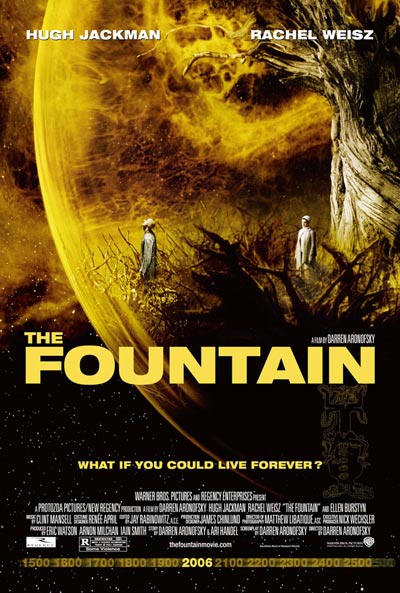
There was Chris Mauch, who helped make the movie poster for the Fountain and who was also one of the story board artists for Ice Age 2: the Meltdown. Here's a movie poster! I think he did the planet...


Then there was Neo Afan, a motion graphics artist, you can see his demo reel at his site http://www.pixelrevolver.com/.


There was Hyun Jeen Lee, a motion graphics artist who helped make a Michelin Man commercial. Her thesis, is here http://www.svacomputerart.com/2007.htmltml.


Last but not least there was Josh Harvey, who was technical director for this awesome Coca Cola Commercial ! (below is picture, lower left is video)Go visit his website at http://www.despairow.com/index_loveBlock.htm


All the SVA students I met in person were BFA students, so all undergraduates. Usually a person who goes to graduate for computer art was an undergraduate at a university.


After watching student work, I began to wonder what professional short films were like. So I armed myself with the best sites ever! Youtube and Wikipedia. Here's the list of all the Academy Award winning Animated Shorts http://en.wikipedia.org/wiki/Academy_Award_for_Best_Animated_Short_Film
From there I started searching one at a time. There are so many amazing little jewels out there... Seriously. Well, some of the films were kind of disturbing (there will always be one), and I didn't really get them, but there's probably someone else out there who appreciates it more than I do.
A few of my favorite animated shorts are : Father and Daughter, made in 2000 by Michael Dudok De Wit. It nearly brought me to tears! Then again, I can get emotional with these sort of things http://www.youtube.com/watch?v=hb-0Py80cMY


I also love Alexander Petrov's the Old Man and the Sea http://www.youtube.com/watch?v=v1EbNvHDxbAbased on Hemingway's work, and My Love http://www.youtube.com/watch?v=dq7nLVoaPX8which is based on the book by Ivan Shmelyov.
Alexander Petrov is a hardcore Russian animator who does EVERYTHING with pastel oil painting on glass panels... glass. I have never seen anything like his work... they're literally oil paintings coming to life...indeed his works are treasures!


Though this poster is in Japanese, this is a RUSSIAN animated film!!! Aaaw, doesn't it look cute? The film says otherwise.
Hedge Hog in the Fog 1975

Alexander Petrov was a student of Yuri Norstein, one of the pioneers in Russian animation when he made Hedgehog in the Fog http://www.youtube.com/watch?v=dRsXU4Q6a0Q which has a dark undertone but is really surreal and beautiful in its own way.

Russian animation is truly a world of its own, completely free from the technological influences of today...so far everything I've seen is done by hand crafts. I should make a separate entry on animations done in different countries...soon it will be time to go global!

Anyway another Academy award winning animated short I like is Harvie Krumpethttp://www.youtube.com/watch?v=ouyVS6HOFeo, an Australian claymation by a man named Adam Elliot. It's about a Polish man who immigrates to Australia and goes through a lot of strange and often unfortunate things in his life, yet somehow he remains optimistic til' the end. I didn't really like the film at first, but I became more attracted to it as I watched it again and again. I don't know what's with the dark undertones in award winning shorts, I think that's the reason why they win... because you can't make any old dark undertoned film under a corporation like Disney.
Adam Elliots' coming out with a new short called Mary and Max, http://www.maryandmax.com/ about a middle-aged Jewish man with Asperger Syndrome in America who befriends an eight year old chubby Australian misfit named Mary through pen pal letters. Sounds odd, but because of Harvie Krumpet, I wouldn't judge too quickly.


Shane Acker is going to direct a full length 3-D animated feature called "9", which is based on his academy award winning short of the same name. He's co-directing with Tim Burton's producing it, and there are a lot of Burton fans out there... waiting to pounce.

Its a new, apocalyptic take on for the 3-D medium, and again with the dark undertones! What's with the dark undertones?! I think its about a man-made doll named 9 who is helped by his doll friends to save the human race...Anyway one thing that bothers me about this film is that all the characters look almost identical, I'm interested to see how they're going to tell them apart based on their characters and not by the number on their backs.

I think I started exploring professional Academy award animated shorts for 2007, the image above is for the nominated film Madame Tutli Putli, which is one of the strangest shorts I've ever seen. Its aesthetically pleasing, but the story has, guess what, a dark undertone that I was a bit creeped out by. What was interesting (and kind of creepy) was that they filmed Mme Tutli Putli without any eyes. Then they videotaped the eyes of a hired actress, looking at the marks on walls already prepared by the artists. Then they combined the live action eyes with the puppet, so that Mme Tutli Putli looks like this :

It was interesting how I watched the film after my AP Lang teacher made us read the essay Death of a Moth by Virginia Woolf, because in the film Mme Tutli Putli turns to a moth, symbolic of her death... this wasn't the only animated short with this moth symbolism. The film Bunny by Blue Sky studios (creators of Ice Age and Robots ) also had the same concept. What a coincidence!

Wow that was a long entry...I hope I didn't drone...my thoughts on animated shorts definitely has to be more organized! Thanks for reading!